The Bears' Cookbook -- Steve's introduction
When Jack and I visited his father, Alfred Garceau, in a Saratoga, N.Y., hospital, shortly before he passed away in late November 1996, his father insisted we take the wrapped sandwiches the nurses had brought him for lunch. He wasn't hungry, he said, and we should eat.
Jack remarked to me later that the gift of the sandwiches was his father's way of showing emotion. Nearing the end of his life, and wanting to tell his family how much he cared about them, his father may have been too self-conscious to bare his feelings to his son. He could show his love, however, by providing the gift of food.
Providing food and drink for others is a multi-leveled way of communicating. In the simplest meaning, it signifies care for the needs of others: take this, eat this, satisfy your hunger. As the food proffered becomes more than the basics needed to sustain life, it takes on additional significance: take this, eat this, it will make you happy. The gift of food becomes a blessing, a benediction, for continued happiness and contentment. Receiving the food is likewise a sign of trust that the food is good and nourishing. As the food becomes even more complex and bountiful and the preparation more time-consuming, it takes on additional significance: this is more than the basics needed to sustain life, I have spent time on this, because your contentment and delight over a splendid meal are worth it.
You are worth it.
If food is the gift of love (usually . . . I never did understand why my mom kept trying to serve us kids summer squash, which we hated), it follows that a cookbook is somehow related. So what could be a better Christmas gift for our loved ones, our friends and family, 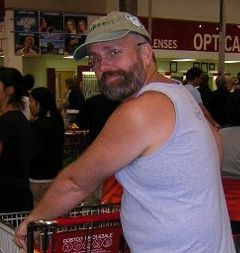 than a cookbook of our favorite recipes? We cribbed the idea from a co-worker, Michele Zellers, who was creating one as a wedding gift for a friend. Over a period of several months, we swapped ideas, shared some fonts and designs, but otherwise we have pretty much worked in a vacuum. We did it all ourselves (using just Microsoft Word and a paint program -- no PhotoShop, Quark, PageMaker, etc. was available), then had a local copy shop print up a little more than 100 copies.
Creating this book has been amusing (especially with all the in-jokes), with some tedium along the way -- mostly the lengthy, late-night process of inputting recipes, and trying to figure out things like how many each recipe would serve (take those recommendations with a grain of salt). Those recipes fall into three categories:
-- Time-tested, tried-and-true recipes that we know and love inside out. These are marked with 4 stars and the initial of whoever usually prepares the dish.
-- Reliable recipes that we have tried and liked. We may have been given the recipe from a friend and tried it only once, or we may have made it several times, but it tasted OK, and we liked it well enough to put in the book.
-- Untried recipes that have been given to us, or that caught our eye in a cookbook, a newspaper food story, on the worldwide web, or the back of the Bisquik box (don't laugh). They looked tasty, and we were wanting to try them, so this cookbook is as handy a place to keep the recipes as anywhere is. You can try them as we do, or even before we do. Let us know how they come out!
Inputting these recipes also gave me some insight into what we like to eat. Going by what showed up the most, we love foods that are creamy, or crunchy, or both (like macaroni and cheese with a crunchy, cheesy topping). When we cook to impress company, I'm likely to cook Italian and Jack is likely to cook French. Our middle-class/working class suburban background crops up in quite a few recipes. Going by number of times ingredients are mentioned, it appears we favor recipes that contain chicken (usually boneless), mushrooms, eggplant and sour cream. Cooking it all in one pot is a bonus -- fewer dishes to clean. Our "dream recipe" would probably be chicken and eggplant stroganoff, started with a mirepoix of celery and onion and then sautéed chicken, finished with mushrooms, a velouté sauce and sour cream, served over farfalle pasta. That recipe's not in the book, but it probably should be. Well, there's always volume II.
Welcome to our table. Sit, eat, enjoy.
-- Steve Freitag, San Francisco, November 1998
The Bears' Cookbook -- Jack's introduction
One of the first Christmas gifts I can remember asking for was a Betty Crocker bake set. Not an Easy-Bake Oven; they didn't exist when I was 5. The set had miniature cake, pie and muffin pans, plastic bowls and spoons, and tiny packages of Betty Crocker cake, muffin and piecrust mixes, as well as a cookbook. I have to give my parents a lot of credit for actually giving this to me, and helping me make little desserts for myself and my stuffed animals. But I guess it was a natural response, since both Mom and Dad were excellent cooks themselves, delighting in feeding their family with dishes both mundane and exotic.
We didn't have a lot of money in those days, and food was one of the few real pleasures we could enjoy. After all, you have to eat, right? My father was a meat cutter by trade, so meat was central to 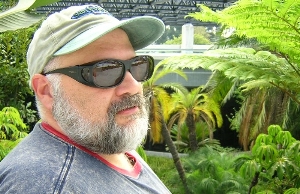 almost every meal. We always had a large vegetable garden, so fresh produce was also often on the table (or home-canned or frozen). And regardless of the frugality of our weekday meals, Sunday afternoon was always a big dinner -- a beef or pork roast, a turkey (which we ate with all the trimmings much more often than Thanksgiving and Christmas), a big ham studded with cloves and pineapple and glazed with brown sugar and mustard, or a big boiled dinner with smoked pork shoulder, cabbage, potatoes, carrots and turnips or rutabaga. We ate Sunday dinner around two in the afternoon, then had a light supper of scrambled eggs, pancakes or galettes (French-Canadian fried dough strips, eaten with butter and either salt or maple syrup). We subscribed to numerous food-oriented magazines (Better Homes and Gardens, Good Housekeeping, Family Circle) and each month Mom, Dad and I would take turns investigating the new recipes and menu plans.
Food was important in our family, and it followed naturally that the Garceau kids would all become capable cooks. All of us worked in food service as our first jobs, and I seriously considered attending the Culinary Institute of America in Hyde Park, N.Y., with the goal of becoming a famous chef. Well, I decided in the long run that computer programming was fun, paid the grocery bills, and allowed occasional splurges on truffles and chanterelles. And since, after all, you have to eat, I could cook for myself, my family and my friends anytime I wanted, plus do the occasional catering gigs and of course my friends Marilyn and Paul Reedy's wedding cake (with Andrea Cioppa Stewart -- took us four days and New Year's Eve to create).
Many of the recipes in this book are gleaned from cookbooks Steve and I treasure, as well as the special box I keep my favorite recipes in, including many Garceau family favorites (well, my favorites at least), and Steve's pick of Freitag family favorites. Others are original creations or variations on a basic recipe.
It is said that we are what we eat. Of course, in a way this is literally true, since the proteins, carbohydrates, fats, vitamins and minerals we ingest become for the most part physically part of our bodies. But the experience of enjoying good food, and sharing it with others, also becomes part of our consciousness; part of who we are. This book represents some of those experiences we have had -- and now we share them with you.
-- Jack Garceau, San Francisco, November 1998

Bearcooks | Food | Cookbook introductions